
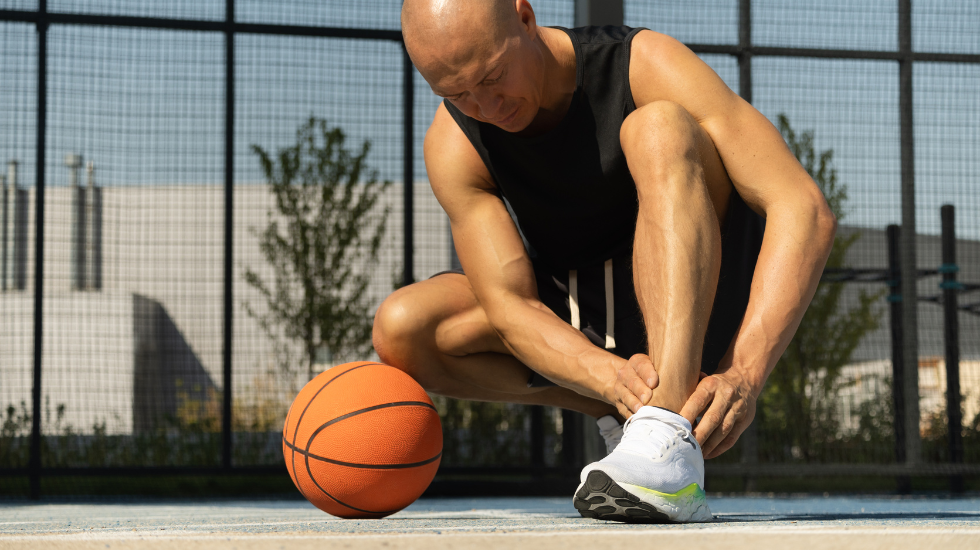
One awkward landing, a sudden change in direction or stepping on another player’s foot can take you out of the game in seconds.
Basketball and volleyball are fast-paced, high-impact sports that place significant demands on the ankles. With constant jumping, landing, pivoting and quick lateral movements, it’s no surprise that ankle injuries are among the most common injuries experienced by court athletes.
Whether you’re a competitive athlete, a student athlete or someone who enjoys recreational sports, understanding ankle injuries and how to properly recover from them can make a significant difference in your long-term performance.
At Aurora Sports Medicine Professionals, we believe that injury prevention is just as important as rehabilitation.
Common Ankle Injuries in Basketball and Volleyball
Lateral Ankle Sprains
The most common type of ankle sprain occurs when the ankle rolls inward, stretching or tearing the ligaments on the outside of the ankle. This often happens when landing from a jump, changing direction quickly or landing on another player’s foot.
High Ankle Sprains
A high ankle sprain involves the ligaments connecting the two lower leg bones above the ankle joint. These injuries can occur during twisting movements and may require a longer recovery period than a typical ankle sprain.
Achilles Tendinopathy
Repeated jumping, explosive movements and sudden increases in training intensity can place excessive stress on the Achilles tendon, leading to pain, stiffness and discomfort at the back of the ankle.
Chronic Ankle Instability
Have you ever noticed that once you sprain your ankle, it seems to happen again and again? Incomplete rehabilitation following an ankle injury can contribute to ongoing weakness, reduced balance and a feeling that your ankle may give way during activity.
Signs You Shouldn’t Ignore
Athletes are often tempted to push through discomfort, especially during an important game or tournament. However, continuing to play on an injured ankle can potentially worsen the injury.
Common symptoms to watch for include:
- Pain when jumping, landing or changing direction
- Swelling or bruising around the ankle
- Stiffness or reduced range of motion
- A feeling of weakness or instability
- Recurring ankle sprains
- Pain or stiffness following practices or games
If you experience any of these symptoms, a professional assessment can help identify the underlying issue and determine the appropriate course of treatment.
If you experience severe pain, an obvious deformity, numbness or an inability to bear weight following an injury, seek prompt medical attention.
How Can You Help Prevent Ankle Injuries?
While not every sports injury can be prevented, there are several steps athletes can take to reduce their risk.
1. Improve Balance and Stability
Single-leg balance exercises and stability training can improve your body’s ability to respond to unexpected movements on the court.
2. Strengthen the Muscles Supporting Your Ankle
Strengthening the muscles of the foot, ankle and lower leg can help improve stability and control during jumping, landing and lateral movements.
3. Practise Proper Landing Mechanics
Learning how to land with control and absorb impact through your ankles, knees and hips can help reduce unnecessary stress on your joints.
4. Warm Up Before Playing
A dynamic warm-up that includes mobility exercises, muscle activation and sport-specific movements helps prepare your body for the demands of the game.
5. Wear Appropriate Footwear
Well-fitting, supportive court shoes are important. Athletes with a history of ankle sprains may also benefit from ankle bracing or taping, when recommended by a healthcare professional.
6. Fully Rehabilitate Previous Injuries
One of the biggest risk factors for another ankle sprain is a previous ankle injury. Just because the swelling has gone down or the pain has disappeared doesn’t necessarily mean your ankle is ready to return to sport.
How Physiotherapy Can Help With Ankle Injuries
At Aurora Sports Medicine Professionals, our physiotherapy team takes an individualized approach to ankle injury rehabilitation, considering your sport, movement patterns, activity level and personal recovery goals.
Depending on your injury, your treatment plan may include:
- Pain and swelling management
- Manual therapy to improve joint mobility
- Targeted strengthening exercises
- Balance and stability training
- Jumping and landing retraining
- Sport-specific rehabilitation exercises
- Ankle bracing or taping recommendations
- Gradual return-to-sport programming
The goal isn’t simply to reduce pain. It’s to restore strength, mobility, stability and confidence while helping reduce the risk of future injuries.
When Is It Safe to Return to the Court?
Every athlete and every injury is different. Returning to sport should be based on how well your ankle functions, rather than simply how much time has passed since the injury.
Before returning to full competition, it’s important to assess your ability to run, jump, land, change direction and perform sport-specific movements with adequate strength, control and confidence.
A physiotherapist can help evaluate your readiness and guide you through a gradual return to practice and competition.
Get Back in the Game With Aurora Sports Medicine Professionals
An ankle injury doesn’t have to keep you on the sidelines long-term. With proper assessment, rehabilitation and injury prevention strategies, you can work towards returning to the sport you love with greater confidence.
Whether you’re recovering from a recent ankle sprain, experiencing ongoing ankle pain or looking to prevent recurring injuries, our team at Aurora Sports Medicine Professionals is here to help.
We proudly support athletes of all ages and skill levels in Aurora, Newmarket, King City, Richmond Hill and surrounding communities.
Don’t wait until your next injury to address your ankle health.
Book an assessment with our physiotherapy team today.
Aurora Sports Medicine Professionals
905.503.2767 | aurorasportsmed.ca